


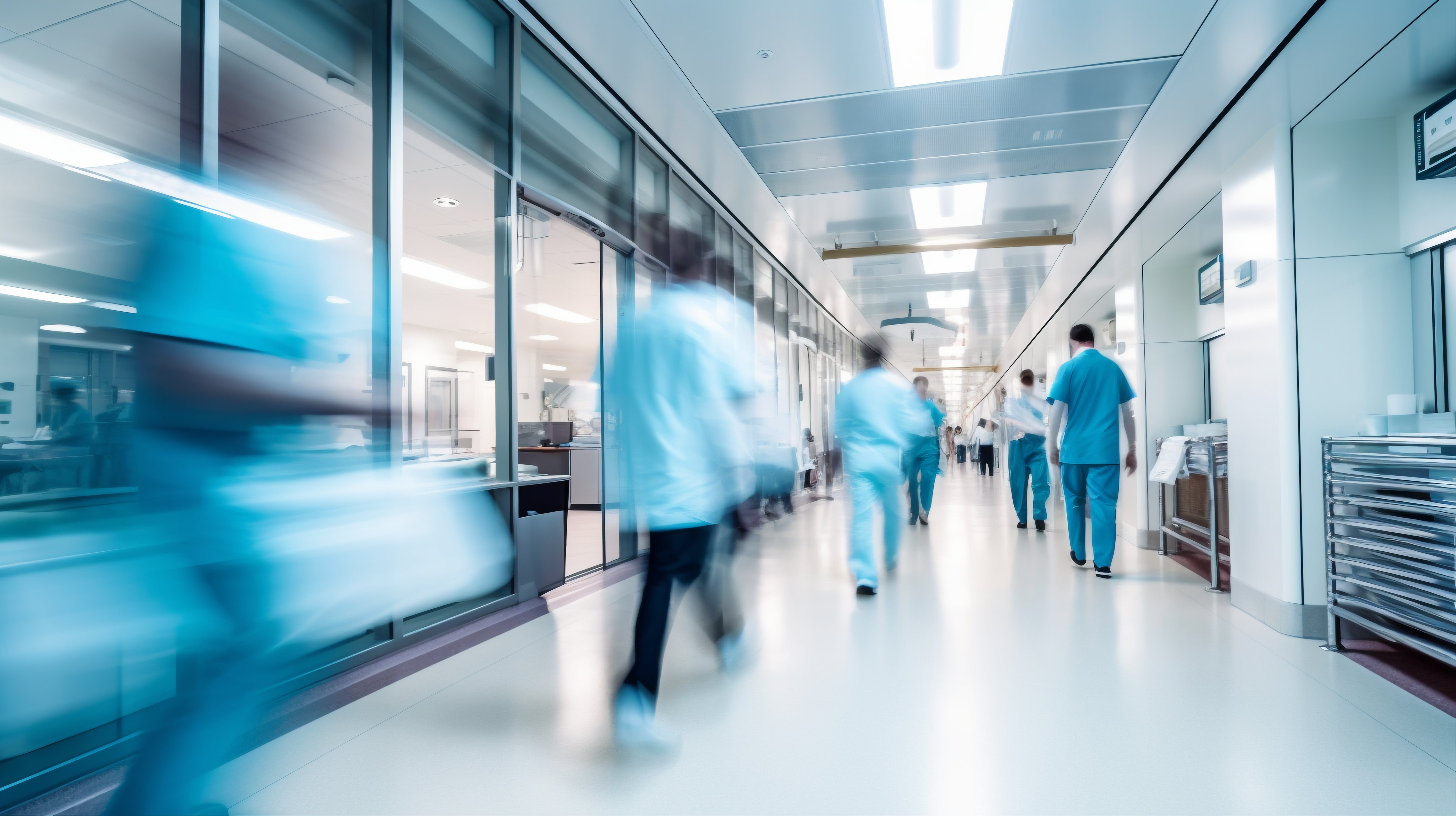
Why light has a care function in health and care.
In clinics, rehabilitation facilities and care areas, light influences far more than just vision. It affects sleep, orientation, stress, daily rhythms and therefore factors that have a direct impact on care and recovery. Standard lighting often leads to too little activating light during the day and too much inappropriate light at night. This is precisely what desynchronizes the circadian rhythm. This is where Human Centric Lighting comes in and is based on people's natural biological rhythms. This makes light an active part of a better care environment.
The benefits of HCL for patients.
The effects described are clear. Under dynamic, circadian-tuned lighting, patients showed longer sleep times at night, higher sleep efficiency and a more stable rest-wake phase. In addition, the risk of delirium was reduced. In a described ICU context, 46 percent of patients in modified rooms developed delirium compared to 76 percent in standard rooms. Shorter length of stay, faster recovery and less pain medication are also mentioned. In a classic observation after spinal surgery, 22 percent less pain medication was required. Well-being, anxiety and depression symptoms also improved.
Why HCL is particularly relevant for geriatrics and care.
Older people lose their sensitivity to light with age. At the same time, the internal clock is more easily thrown out of sync. This is precisely why HCL is particularly relevant in geriatrics, dementia care and long-term care. Among other things, more stable day-night rhythms, up to 43 percent better sleep quality, 38 percent less restlessness at night and 15 percent fewer falls at night have been described. These are effects that directly improve care, safety and quality of stay.
The added value this creates for staff and operations.
Good lighting quality is also operationally relevant for medical staff. In 24/7 environments with a high level of responsibility, attention counts. Circadian-informed lighting can make it easier to adapt to shift work, reduce sleep disturbances and improve responsiveness. In the effects described, around 50 percent fewer lapses in concentration and faster reaction times were reported. In addition, greater satisfaction with more natural lighting atmospheres was described. This has a direct impact on error prevention, staff stability and quality of work.
How HCL can be categorized economically.
If the length of stay is reduced, pain medication is reduced and staff work more stably, there are direct economic effects. This is complemented by classic energy savings with demand-based, sensor-controlled LED lighting. This is precisely why HCL in healthcare buildings is not only medically relevant, but also economically relevant. At the same time. The more differentiated the lighting concept is adapted to the room function, time of day and patient group, the greater the benefits.
Conclusion:
Human Centric Lighting in health and care is not just an atmospheric addition. It is an effective element for better care, more orientation, more stable processes and more humane environments. Anyone planning healthcare buildings for the future today should think of light as part of care.

Human-Centric Lighting in Schools. Better learning conditions through intelligent lighting.
Human Centric Lighting promotes concentration, learning performance and well-being in schools. Dynam …

Human-Centric Lighting in the Office. Increased productivity, reduced fatigue.
Human Centric Lighting promotes concentration, alertness and well-being in the office throughout the …

Lighting control with onework CORE. Uniform light quality instead of isolated group logic.
With onework CORE, lighting is controlled across zones in a systematic manner. This ensures consiste …
No Comments Yet
Let us know what you think